


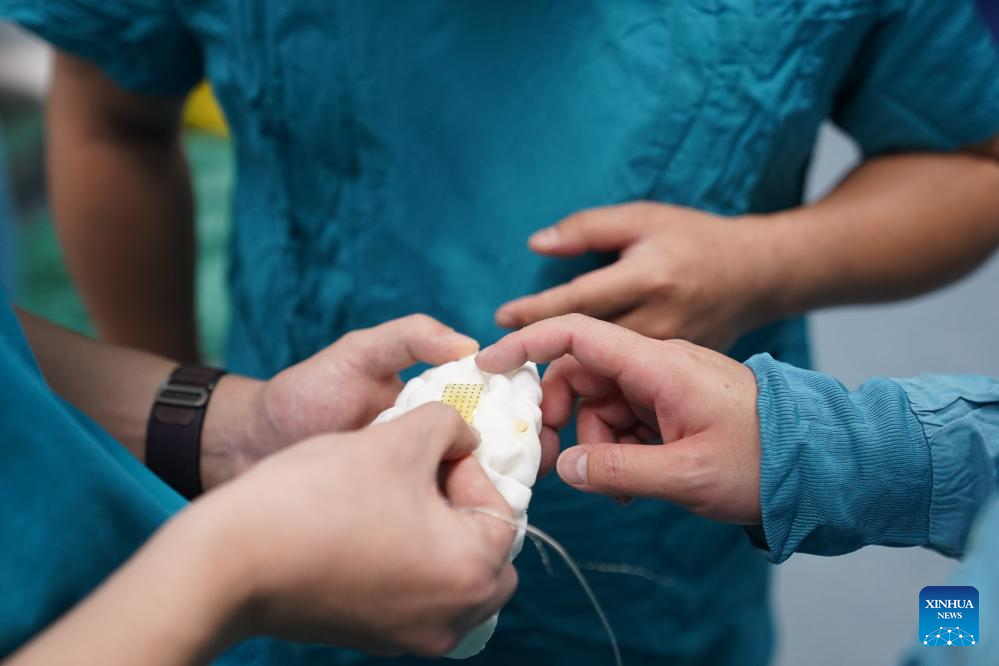
Clinicians discuss the details of cortical electrode implantation during a brain-computer interface surgery in Nanchang, east China’s Jiangxi Province, Dec. 21, 2025. Recently, a neurosurgery team at the First Affiliated Hospital of Nanchang University successfully performed a clinical operation of the fully implantable, fully wireless, fully functional (“Triple-F”) brain-computer interface (BCI) system.
The “Triple-F” system employs a flexible cortical electrode array positioned subdurally over the motor cortex, capturing neural signals without parenchymal penetration.
By integrating sub-50ms end-to-end latency with BCI-driven functional electrical stimulation (BCI-FES), the system enables a 29-year-old high-level spinal cord injury patient — a former art teacher — to regain autonomous hand control for eating, writing, and painting within one month post-implantation. (Xinhua/Zhou Mi)
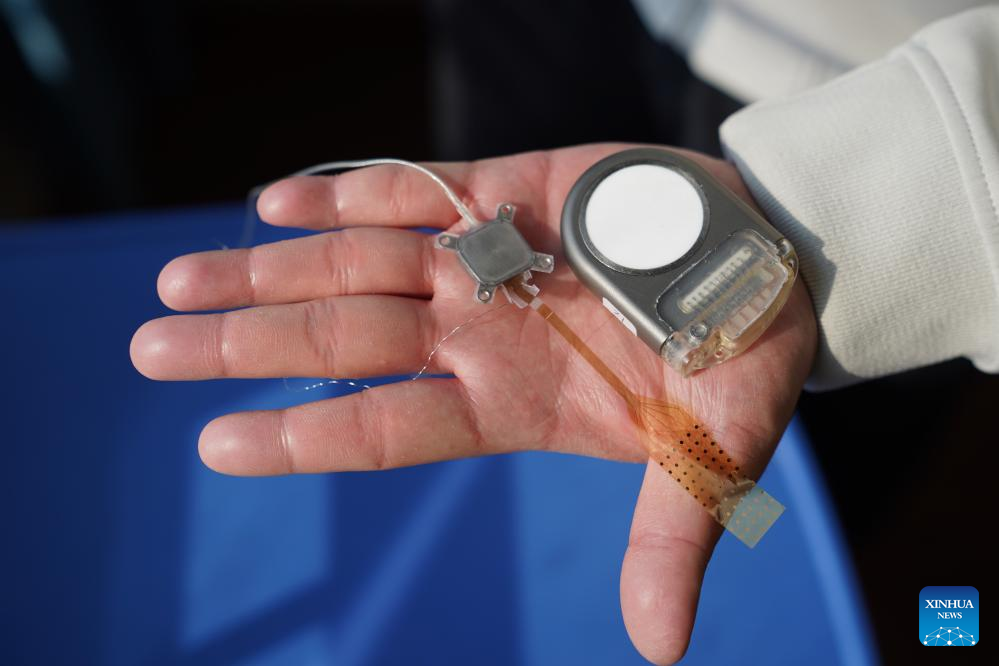
This photo taken on Dec. 19, 2025 shows the brain-computer interface device to be implanted in the clinical surgery, in Nanchang, east China’s Jiangxi Province. Recently, a neurosurgery team at the First Affiliated Hospital of Nanchang University successfully performed a clinical operation of the fully implantable, fully wireless, fully functional (“Triple-F”) brain-computer interface (BCI) system.
The “Triple-F” system employs a flexible cortical electrode array positioned subdurally over the motor cortex, capturing neural signals without parenchymal penetration.
By integrating sub-50ms end-to-end latency with BCI-driven functional electrical stimulation (BCI-FES), the system enables a 29-year-old high-level spinal cord injury patient — a former art teacher — to regain autonomous hand control for eating, writing, and painting within one month post-implantation. (Xinhua/Zhou Mi)
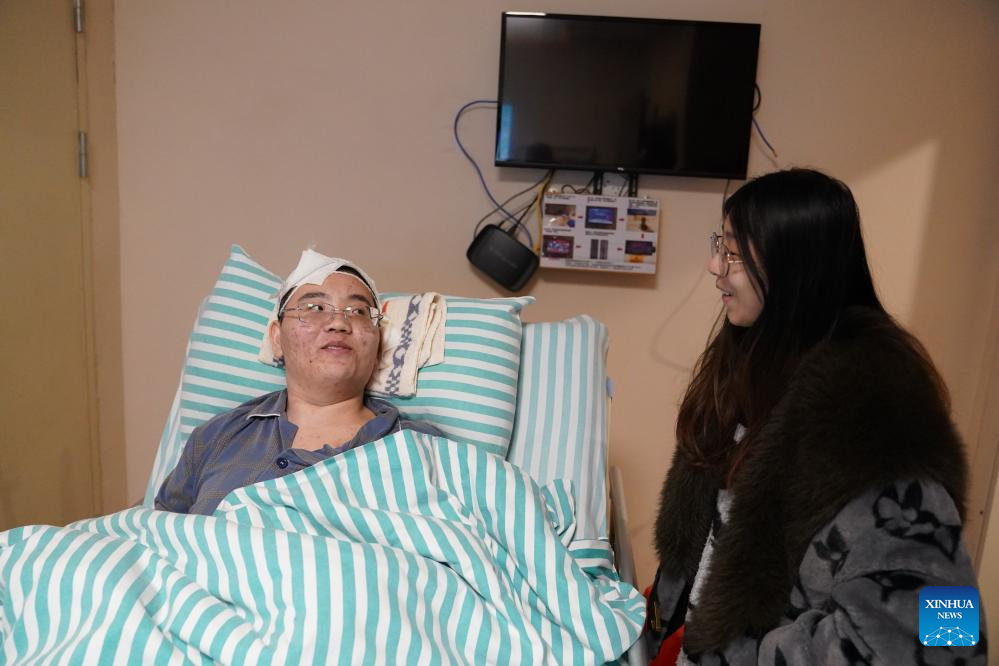
Mr. Deng talks with his wife during the postoperative recovery phase in Nanchang, east China’s Jiangxi Province, Jan. 5, 2026. Recently, a neurosurgery team at the First Affiliated Hospital of Nanchang University successfully performed a clinical operation of the fully implantable, fully wireless, fully functional (“Triple-F”) brain-computer interface (BCI) system.
The “Triple-F” system employs a flexible cortical electrode array positioned subdurally over the motor cortex, capturing neural signals without parenchymal penetration.
By integrating sub-50ms end-to-end latency with BCI-driven functional electrical stimulation (BCI-FES), the system enables a 29-year-old high-level spinal cord injury patient — a former art teacher — to regain autonomous hand control for eating, writing, and painting within one month post-implantation. (Xinhua/Zhou Mi)
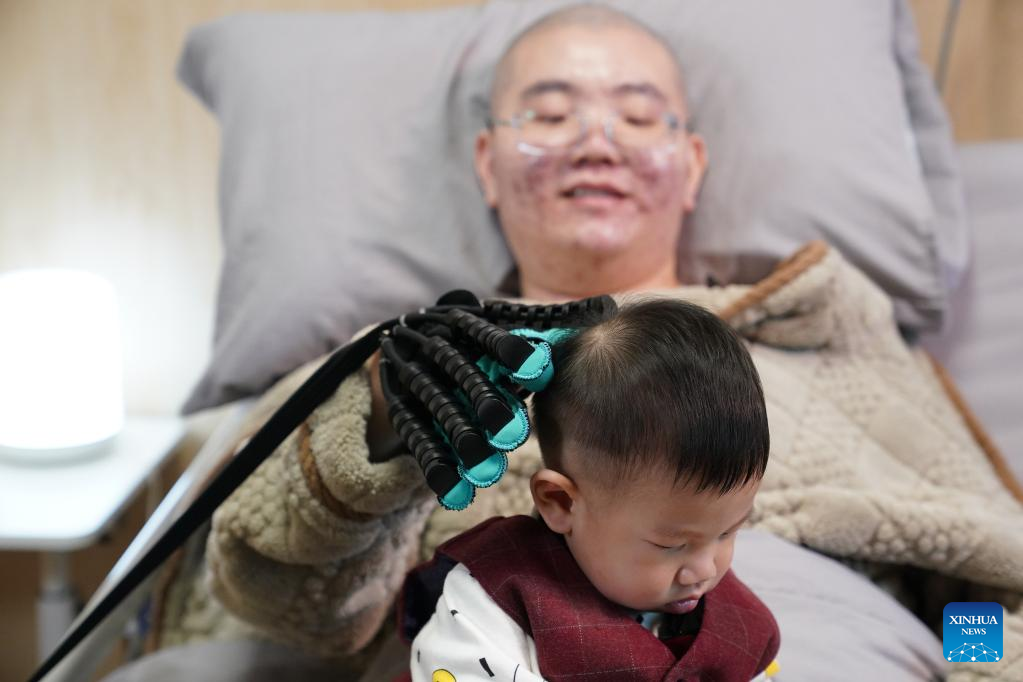
Mr. Deng (back) controls an exoskeleton via brain-computer interface to touch his son, in Nanchang, east China’s Jiangxi Province, March 28, 2026. Recently, a neurosurgery team at the First Affiliated Hospital of Nanchang University successfully performed a clinical operation of the fully implantable, fully wireless, fully functional (“Triple-F”) brain-computer interface (BCI) system.
The “Triple-F” system employs a flexible cortical electrode array positioned subdurally over the motor cortex, capturing neural signals without parenchymal penetration.
By integrating sub-50ms end-to-end latency with BCI-driven functional electrical stimulation (BCI-FES), the system enables a 29-year-old high-level spinal cord injury patient — a former art teacher — to regain autonomous hand control for eating, writing, and painting within one month post-implantation. (Xinhua/Zhou Mi)
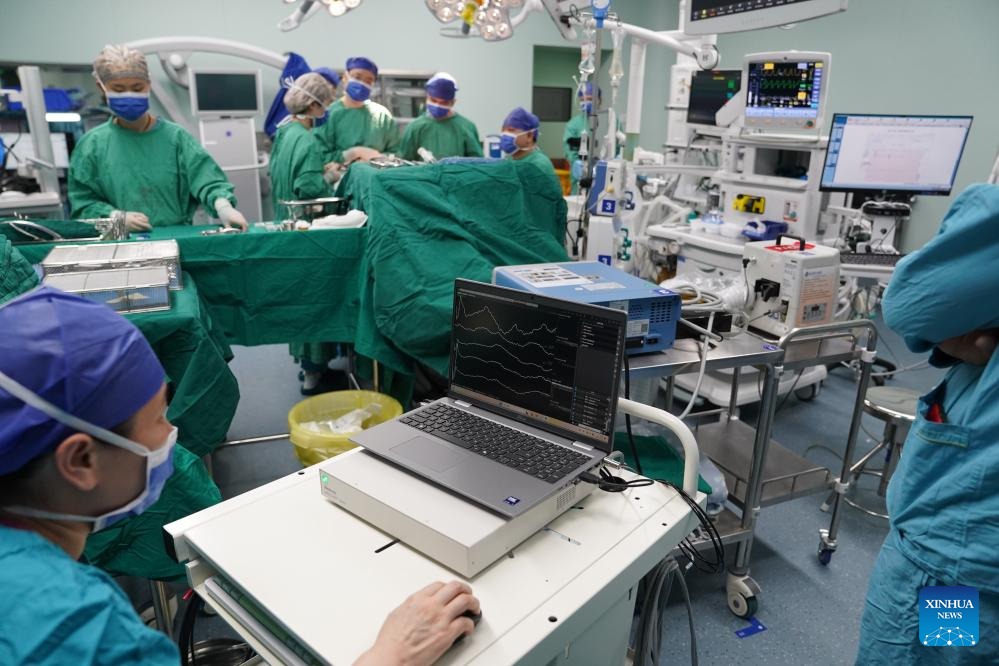
This photo taken on Dec. 21, 2025 shows the scene of a brain-computer interface surgery, during which brain neural signals have been recorded, in Nanchang, east China’s Jiangxi Province. Recently, a neurosurgery team at the First Affiliated Hospital of Nanchang University successfully performed a clinical operation of the fully implantable, fully wireless, fully functional (“Triple-F”) brain-computer interface (BCI) system.
The “Triple-F” system employs a flexible cortical electrode array positioned subdurally over the motor cortex, capturing neural signals without parenchymal penetration.
By integrating sub-50ms end-to-end latency with BCI-driven functional electrical stimulation (BCI-FES), the system enables a 29-year-old high-level spinal cord injury patient — a former art teacher — to regain autonomous hand control for eating, writing, and painting within one month post-implantation. (Xinhua/Zhou Mi)
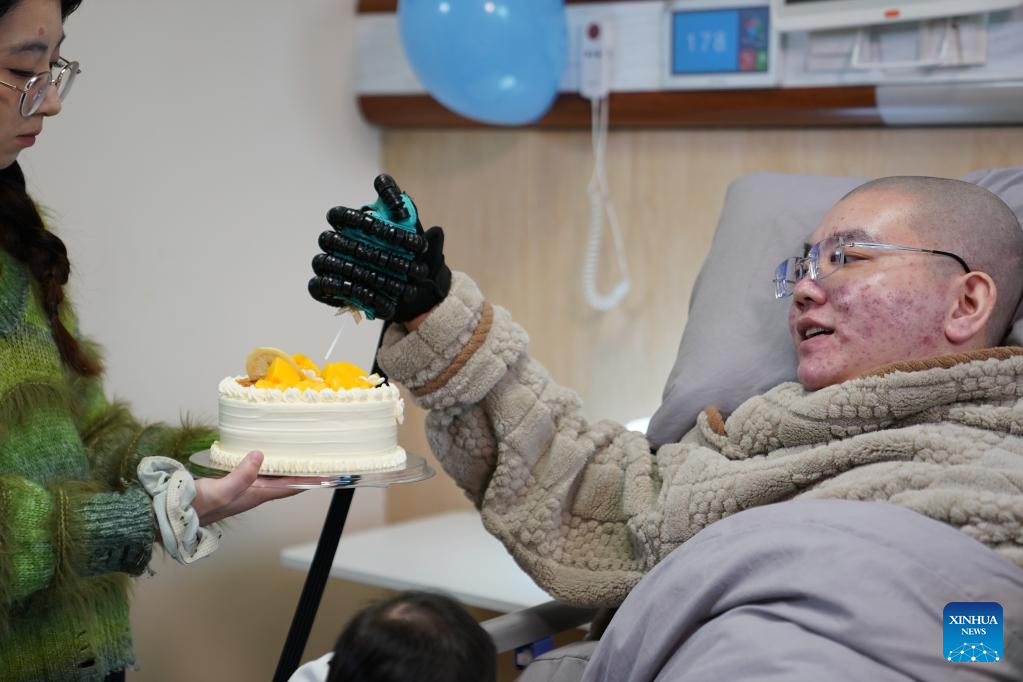
Mr. Deng controls an exoskeleton via brain-computer interface to place candles on a cake in Nanchang, east China’s Jiangxi Province, March 28, 2026. Recently, a neurosurgery team at the First Affiliated Hospital of Nanchang University successfully performed a clinical operation of the fully implantable, fully wireless, fully functional (“Triple-F”) brain-computer interface (BCI) system.
The “Triple-F” system employs a flexible cortical electrode array positioned subdurally over the motor cortex, capturing neural signals without parenchymal penetration.
By integrating sub-50ms end-to-end latency with BCI-driven functional electrical stimulation (BCI-FES), the system enables a 29-year-old high-level spinal cord injury patient — a former art teacher — to regain autonomous hand control for eating, writing, and painting within one month post-implantation. (Xinhua/Zhou Mi)
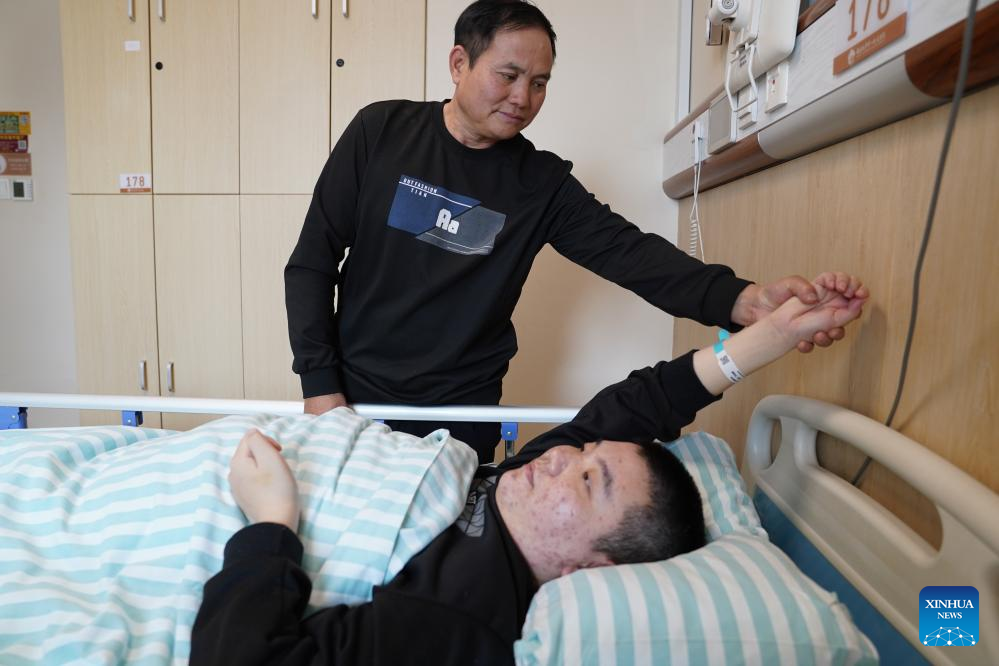
Mr. Deng’s family member assists him in moving his arm before undergoing brain-computer interface surgery, in Nanchang, east China’s Jiangxi Province, Dec. 15, 2025. Recently, a neurosurgery team at the First Affiliated Hospital of Nanchang University successfully performed a clinical operation of the fully implantable, fully wireless, fully functional (“Triple-F”) brain-computer interface (BCI) system.
The “Triple-F” system employs a flexible cortical electrode array positioned subdurally over the motor cortex, capturing neural signals without parenchymal penetration.
By integrating sub-50ms end-to-end latency with BCI-driven functional electrical stimulation (BCI-FES), the system enables a 29-year-old high-level spinal cord injury patient — a former art teacher — to regain autonomous hand control for eating, writing, and painting within one month post-implantation. (Xinhua/Zhou Mi)
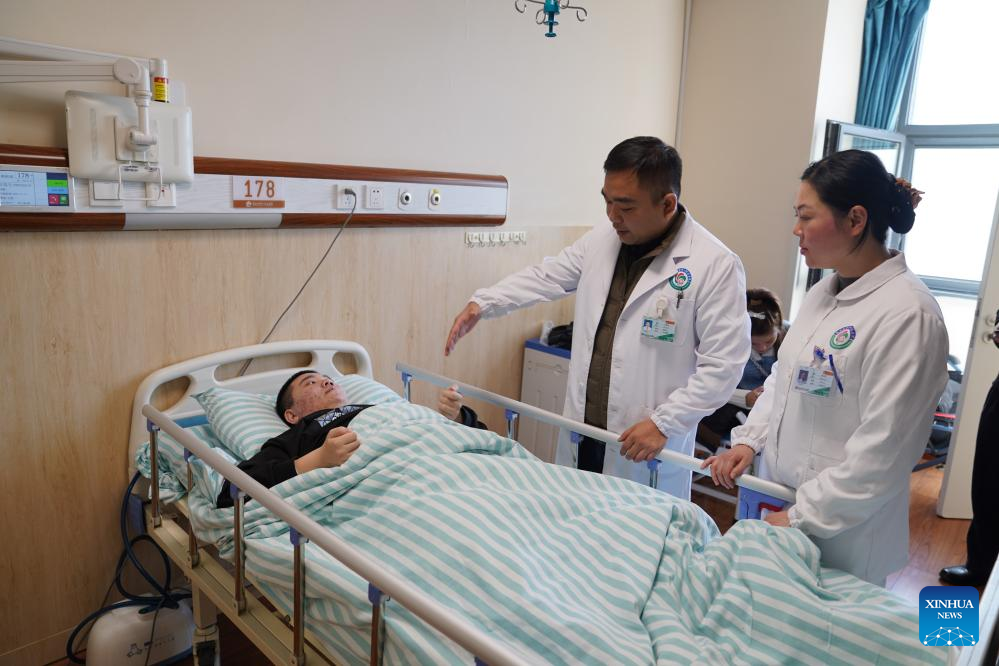
Mr. Deng undergoes a medical assessment as doctors prepare for the brain-computer interface surgery, in Nanchang, east China’s Jiangxi Province, Dec. 15, 2025. Recently, a neurosurgery team at the First Affiliated Hospital of Nanchang University successfully performed a clinical operation of the fully implantable, fully wireless, fully functional (“Triple-F”) brain-computer interface (BCI) system.
The “Triple-F” system employs a flexible cortical electrode array positioned subdurally over the motor cortex, capturing neural signals without parenchymal penetration.
By integrating sub-50ms end-to-end latency with BCI-driven functional electrical stimulation (BCI-FES), the system enables a 29-year-old high-level spinal cord injury patient — a former art teacher — to regain autonomous hand control for eating, writing, and painting within one month post-implantation. (Xinhua/Zhou Mi)
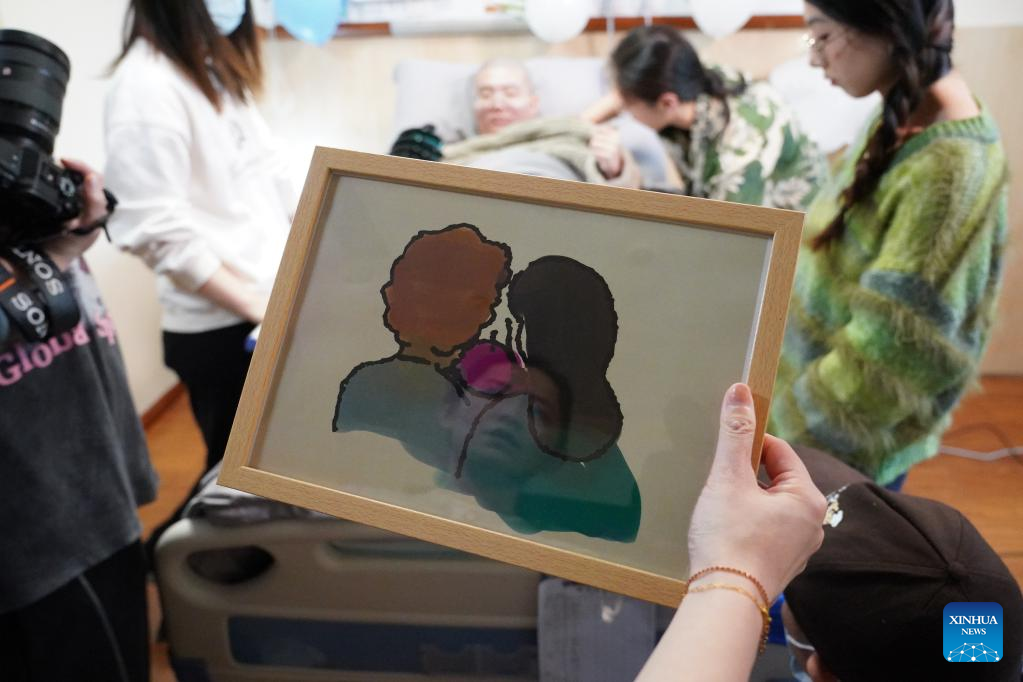
This photo taken on March 28, 2026 shows a family portrait created by Mr. Deng by controlling an exoskeleton via a brain-computer interface, in Nanchang, east China’s Jiangxi Province. Recently, a neurosurgery team at the First Affiliated Hospital of Nanchang University successfully performed a clinical operation of the fully implantable, fully wireless, fully functional (“Triple-F”) brain-computer interface (BCI) system.
The “Triple-F” system employs a flexible cortical electrode array positioned subdurally over the motor cortex, capturing neural signals without parenchymal penetration.
By integrating sub-50ms end-to-end latency with BCI-driven functional electrical stimulation (BCI-FES), the system enables a 29-year-old high-level spinal cord injury patient — a former art teacher — to regain autonomous hand control for eating, writing, and painting within one month post-implantation. (Xinhua/Zhou Mi)
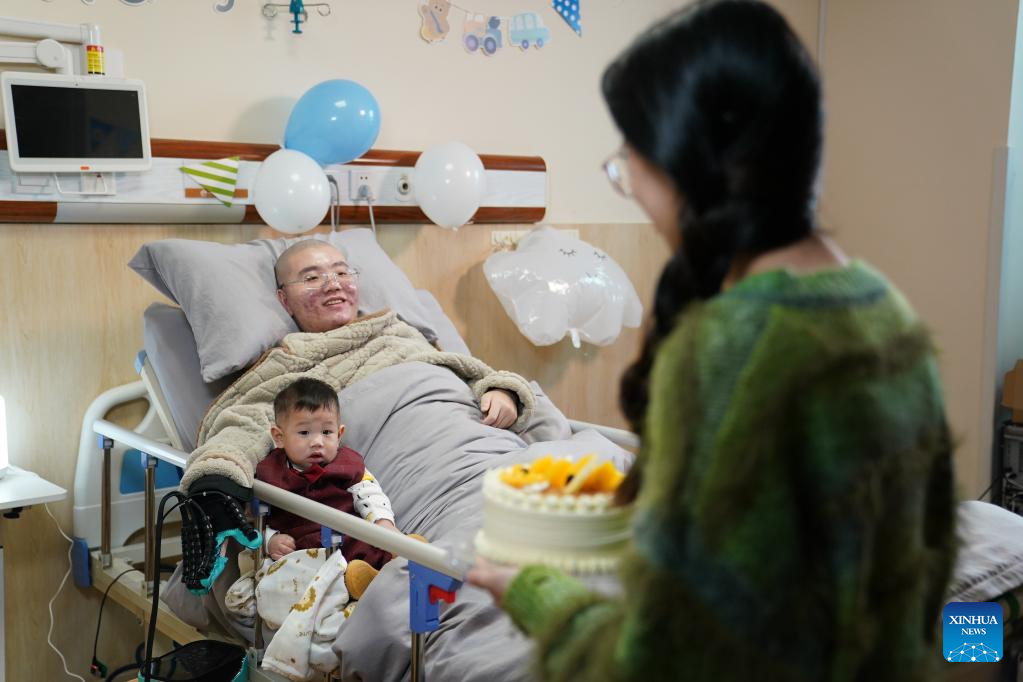
Mr. Deng celebrates his child’s birthday with his family in Nanchang, east China’s Jiangxi Province, March 28, 2026. Recently, a neurosurgery team at the First Affiliated Hospital of Nanchang University successfully performed a clinical operation of the fully implantable, fully wireless, fully functional (“Triple-F”) brain-computer interface (BCI) system.
The “Triple-F” system employs a flexible cortical electrode array positioned subdurally over the motor cortex, capturing neural signals without parenchymal penetration.
By integrating sub-50ms end-to-end latency with BCI-driven functional electrical stimulation (BCI-FES), the system enables a 29-year-old high-level spinal cord injury patient — a former art teacher — to regain autonomous hand control for eating, writing, and painting within one month post-implantation. (Xinhua/Zhou Mi)
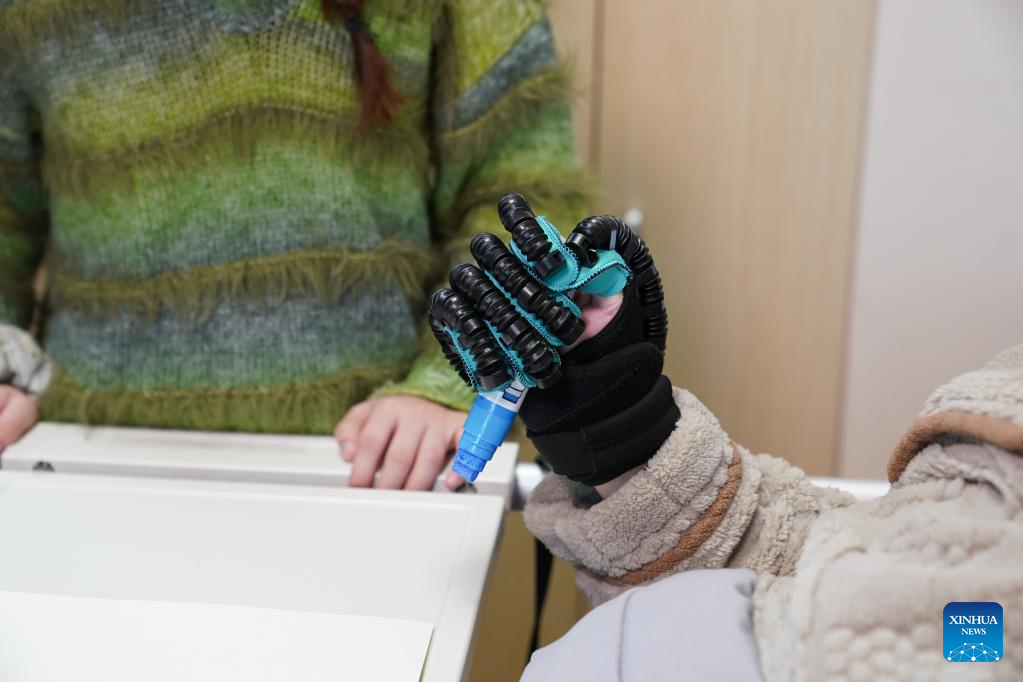
Mr. Deng controls an exoskeleton via brain-computer interface to hold a pen and paint, in Nanchang, east China’s Jiangxi Province, March 28, 2026. Recently, a neurosurgery team at the First Affiliated Hospital of Nanchang University successfully performed a clinical operation of the fully implantable, fully wireless, fully functional (“Triple-F”) brain-computer interface (BCI) system.
The “Triple-F” system employs a flexible cortical electrode array positioned subdurally over the motor cortex, capturing neural signals without parenchymal penetration.
By integrating sub-50ms end-to-end latency with BCI-driven functional electrical stimulation (BCI-FES), the system enables a 29-year-old high-level spinal cord injury patient — a former art teacher — to regain autonomous hand control for eating, writing, and painting within one month post-implantation. (Xinhua/Zhou Mi)
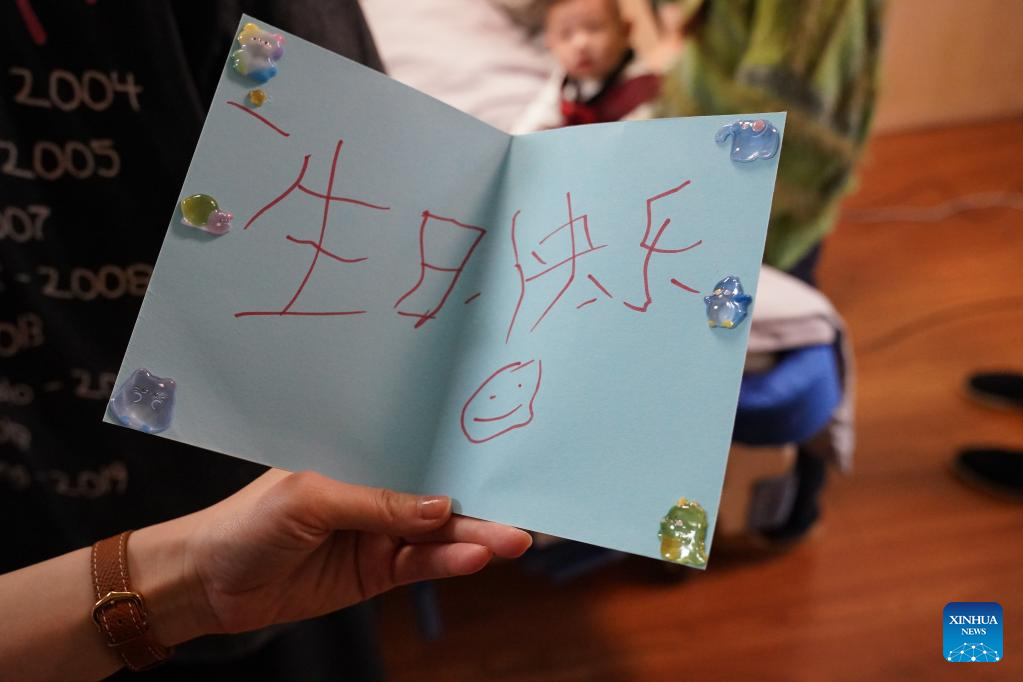
This photo taken on March 28, 2026 shows a birthday card written by Mr. Deng by controlling an exoskeleton via a brain-computer interface, in Nanchang, east China’s Jiangxi Province. Recently, a neurosurgery team at the First Affiliated Hospital of Nanchang University successfully performed a clinical operation of the fully implantable, fully wireless, fully functional (“Triple-F”) brain-computer interface (BCI) system.
The “Triple-F” system employs a flexible cortical electrode array positioned subdurally over the motor cortex, capturing neural signals without parenchymal penetration.
By integrating sub-50ms end-to-end latency with BCI-driven functional electrical stimulation (BCI-FES), the system enables a 29-year-old high-level spinal cord injury patient — a former art teacher — to regain autonomous hand control for eating, writing, and painting within one month post-implantation. (Xinhua/Zhou Mi)
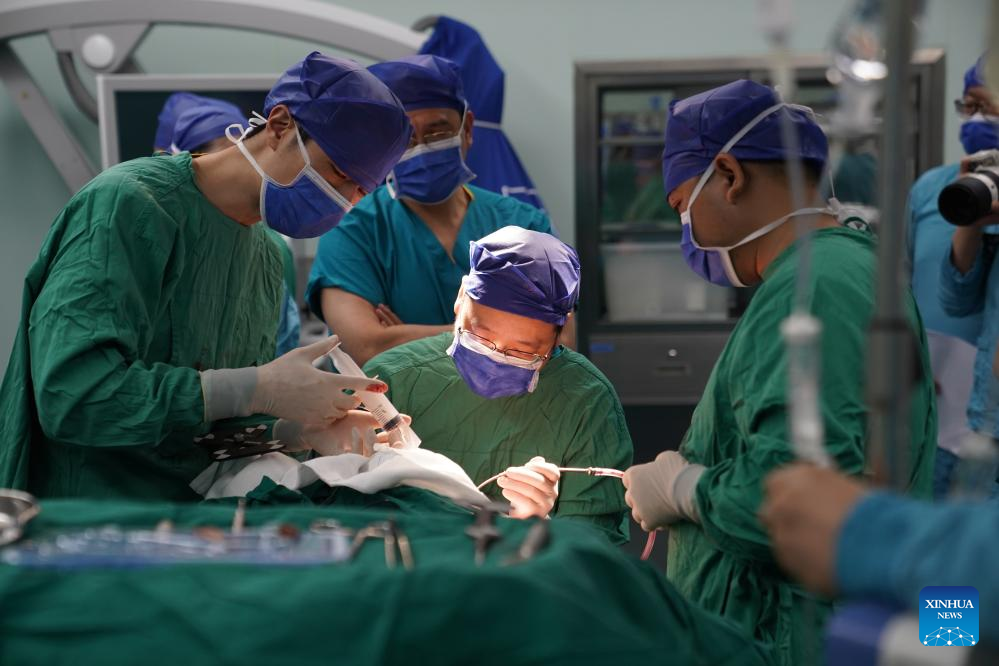
This photo taken on Dec. 21, 2025 shows the scene of a brain-computer interface surgery in Nanchang, east China’s Jiangxi Province. Recently, a neurosurgery team at the First Affiliated Hospital of Nanchang University successfully performed a clinical operation of the fully implantable, fully wireless, fully functional (“Triple-F”) brain-computer interface (BCI) system.
The “Triple-F” system employs a flexible cortical electrode array positioned subdurally over the motor cortex, capturing neural signals without parenchymal penetration.
By integrating sub-50ms end-to-end latency with BCI-driven functional electrical stimulation (BCI-FES), the system enables a 29-year-old high-level spinal cord injury patient — a former art teacher — to regain autonomous hand control for eating, writing, and painting within one month post-implantation. (Xinhua/Zhou Mi)
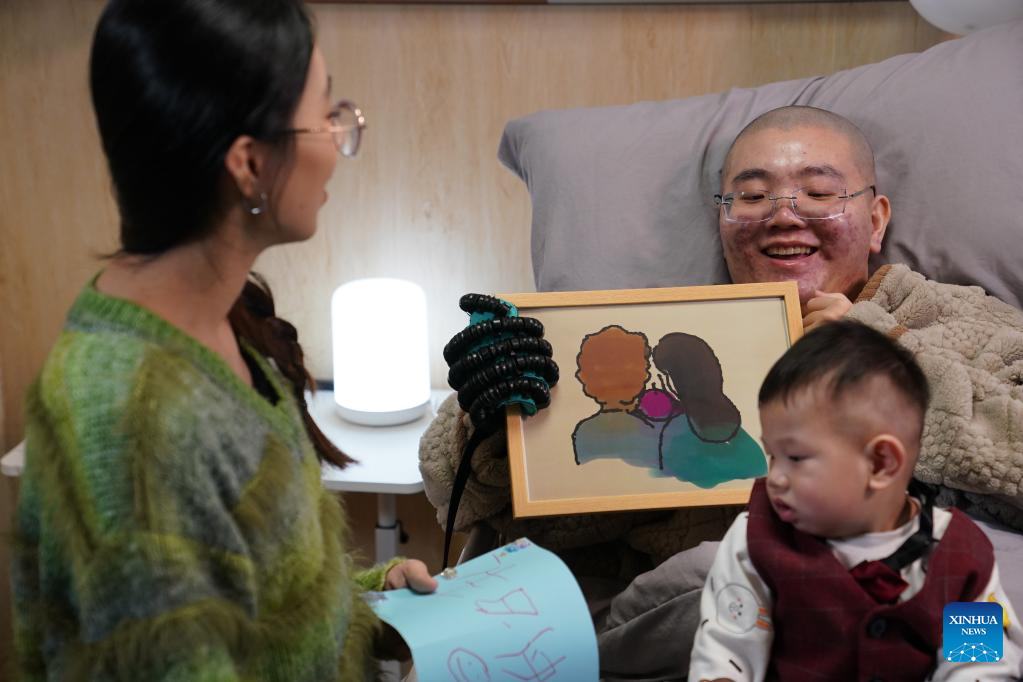
Mr. Deng controls an exoskeleton via brain-computer interface to display a family portrait created by himself in Nanchang, east China’s Jiangxi Province, March 28, 2026. Recently, a neurosurgery team at the First Affiliated Hospital of Nanchang University successfully performed a clinical operation of the fully implantable, fully wireless, fully functional (“Triple-F”) brain-computer interface (BCI) system.
The “Triple-F” system employs a flexible cortical electrode array positioned subdurally over the motor cortex, capturing neural signals without parenchymal penetration.
By integrating sub-50ms end-to-end latency with BCI-driven functional electrical stimulation (BCI-FES), the system enables a 29-year-old high-level spinal cord injury patient — a former art teacher — to regain autonomous hand control for eating, writing, and painting within one month post-implantation. (Xinhua/Zhou Mi)
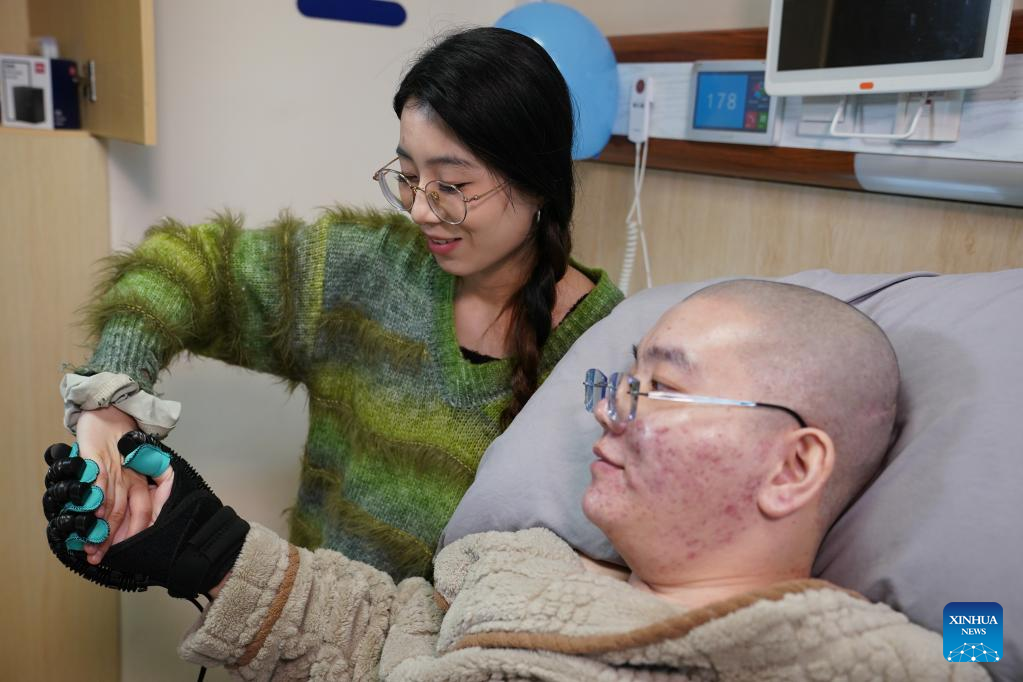
Mr. Deng controls an exoskeleton via brain-computer interface to shake hands with his wife in Nanchang, east China’s Jiangxi Province, March 28, 2026. Recently, a neurosurgery team at the First Affiliated Hospital of Nanchang University successfully performed a clinical operation of the fully implantable, fully wireless, fully functional (“Triple-F”) brain-computer interface (BCI) system.
The “Triple-F” system employs a flexible cortical electrode array positioned subdurally over the motor cortex, capturing neural signals without parenchymal penetration.
By integrating sub-50ms end-to-end latency with BCI-driven functional electrical stimulation (BCI-FES), the system enables a 29-year-old high-level spinal cord injury patient — a former art teacher — to regain autonomous hand control for eating, writing, and painting within one month post-implantation. (Xinhua/Zhou Mi)

