

• Latest
  • Trending
  • All
Interview: IMF official says Asian economies should promote energy supply diversification

Interview: IMF official says Asian economies should promote energy supply diversification

April 30, 2026

China strengthens customs IPR protection, steps up crackdown on infringement

May 7, 2026

Bahia rallies late to hold Santos

May 2, 2026

Barcelona moves closer to La Liga title after beating Getafe

May 2, 2026

Stomach virus forces Swiatek out of Madrid Open

May 2, 2026

China sweeps Denmark to reach Uber Cup quarterfinals

May 2, 2026

BWF approves 3×15 scoring system for badminton from 2027

May 2, 2026

Arsenal back on top with narrow win, West Ham and Tottenham take big wins

May 2, 2026

Bayern escapes Mainz scare before Paris showdown

May 2, 2026

Chinese center Han scores 20 in debut after Liberty return

May 2, 2026
China, Thailand split relay golds as beach athletics conclude at Asian Beach Games

China, Thailand split relay golds as beach athletics conclude at Asian Beach Games

May 2, 2026
Promotional campaign held in Sri Lanka to celebrate Int'l Taijiquan Day

Promotional campaign held in Sri Lanka to celebrate Int'l Taijiquan Day

May 2, 2026

Preview: CBA playoffs loom with questions surrounding top teams

May 2, 2026
  • About
  • Advertise
  • Privacy & Policy
  • Contact
Friday, May 8, 2026
  • Login
Worldlyze
  • Home
    • Home – Layout 1
    • Home – Layout 2
    • Home – Layout 3
    • Home – Layout 4
    • Home – Layout 5
No Result
View All Result
Worldlyze
No Result
View All Result
Home World News

Interview: IMF official says Asian economies should promote energy supply diversification

by Sean
1 week ago
in World News
0
Interview: IMF official says Asian economies should promote energy supply diversification
491
SHARES
1.4k
VIEWS
Share on FacebookShare on Twitter


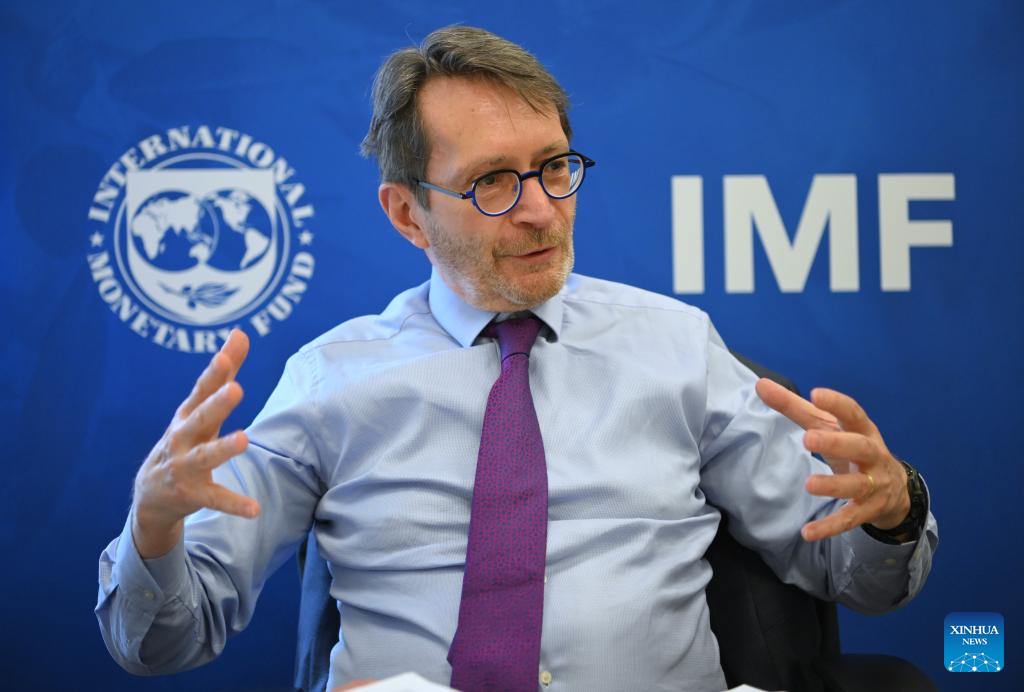
Thomas Helbling, deputy director in the International Monetary Fund (IMF)’s Asia and Pacific department, speaks in an interview with Xinhua in Washington, D.C., the United States, April 15, 2026. (Xinhua/Li Rui)

by Xiong Maoling, Li Rui

WASHINGTON, April 25 (Xinhua) — The global energy supply disruption caused by the war in the Middle East has heightened Asia’s concerns about energy diversification, an International Monetary Fund (IMF) official has said.

“I think the shock has brought to the fore concerns about energy security,” Thomas Helbling, deputy director in the IMF’s Asia and Pacific department, told Xinhua.

According to the IMF’s latest Regional Economic Outlook for Asia and Pacific released last week, Asia’s growth is projected to moderate from 5 percent in 2025 to 4.4 percent in 2026 and 4.2 percent in 2027.

The report noted that the region’s oil and gas use amounts to about 4 percent of GDP, nearly double Europe’s share. It exceeds 10 percent in economies such as Malaysia and Thailand, where transport and industry play larger roles.

The Middle East remains the main source of oil supplies for many Asian economies, but greater energy diversification — reducing reliance on any single source by expanding the mix of energy supplies — would strengthen Asia’s long-term energy security, Helbling said.

“We also say economies that are more fossil fuel-intensive are more affected,” Helbling said, adding that Asia serves as a major manufacturing hub for the world and therefore consumes a significant amount of energy in producing goods that are also exported globally.

The IMF official noted that emerging and developing economies in Asia are generally more vulnerable to energy shocks because consumers and end users spend a larger share of their income on fossil fuels compared with those in more developed economies.

Helbling said another concern for net energy importers is that if they face balance-of-payments financing constraints, higher import costs make it more difficult to finance oil imports.

Looking forward, there is considerable uncertainty facing the Asian economy and the global economy more broadly, he noted.

Monetary policy should be agile to anchor inflation expectations and prevent the energy shock from generating significant second-round effects, he said, urging Asian policymakers to allow exchange rates to act as shock absorbers, particularly in energy-importing and trade-dependent economies. ■
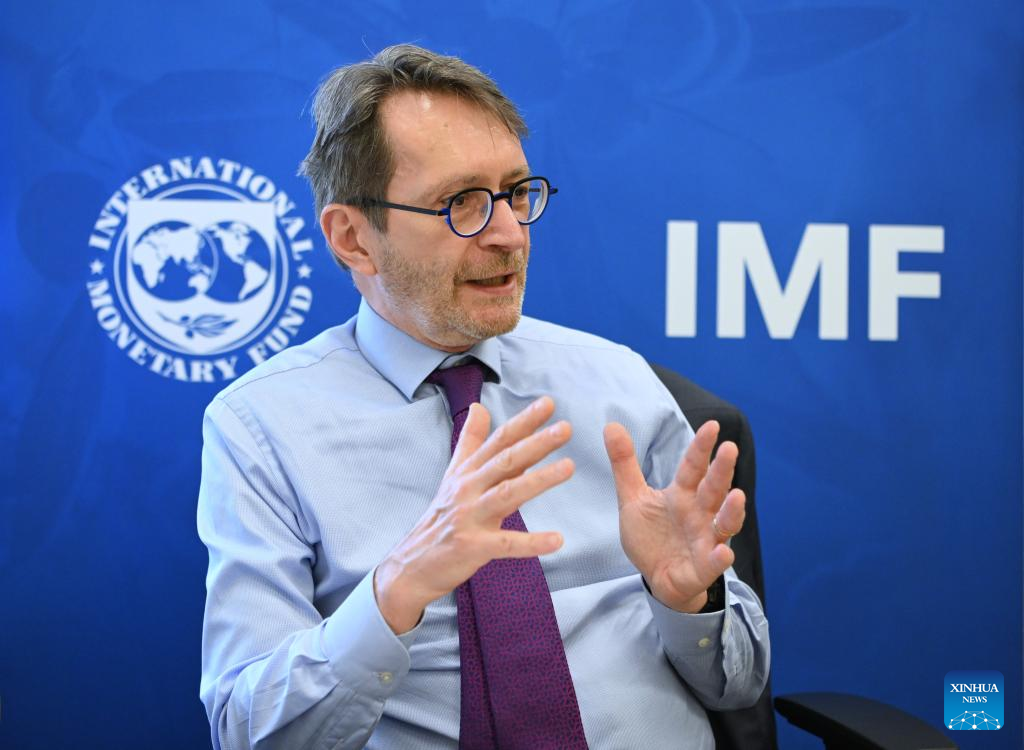
Thomas Helbling, deputy director in the International Monetary Fund (IMF)’s Asia and Pacific department, speaks in an interview with Xinhua in Washington, D.C., the United States, April 15, 2026. (Xinhua/Li Rui)

Source link

Tags: world
Share196Tweet123
  • Trending
  • Comments
  • Latest

Stomach virus forces Swiatek out of Madrid Open

May 2, 2026

China sweeps Denmark to reach Uber Cup quarterfinals

May 2, 2026

BWF approves 3×15 scoring system for badminton from 2027

May 2, 2026
China confers highest youth honor on 29 individuals, 30 organizations

China confers highest youth honor on 29 individuals, 30 organizations

0

China Focus: Chinese navy hospital ship treats over 26,000 in longest overseas medical mission

0

Senior CPC official stresses correct understanding of governance performance at all levels

0

China strengthens customs IPR protection, steps up crackdown on infringement

May 7, 2026

Bahia rallies late to hold Santos

May 2, 2026

Barcelona moves closer to La Liga title after beating Getafe

May 2, 2026
Worldlyze

Copyright © 2026 Worldlyze.

Navigate Site

  • About
  • Advertise
  • Privacy & Policy
  • Contact

Follow Us

Welcome Back!

Login to your account below

Forgotten Password?

Retrieve your password

Please enter your username or email address to reset your password.

Log In
No Result
View All Result
  • Home

Copyright © 2026 Worldlyze.